
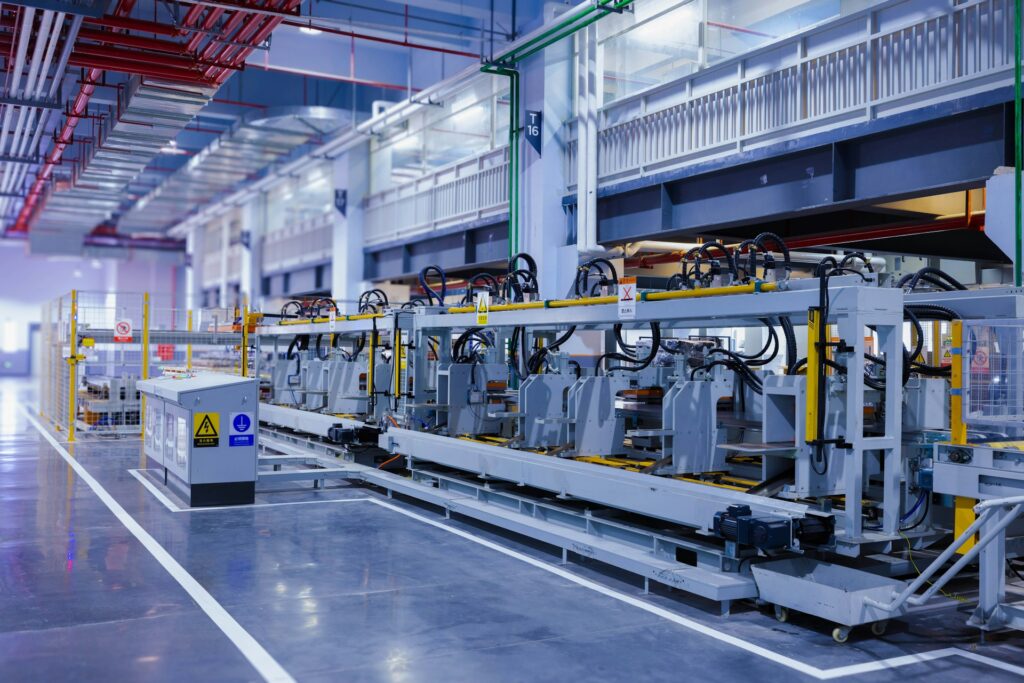
Installing large industrial machinery is not simply a matter of placing equipment in roughly the right position and connecting power. Many machines depend on extremely accurate alignment, stable foundations and carefully controlled loads if they are going to operate efficiently over the long term. This is where heavy equipment installation experts become especially important, because small errors during setup can lead to vibration, uneven wear, reduced output and problems that may not become obvious until the equipment has been running for weeks or months. Precision at the installation stage can therefore have a direct effect on reliability, maintenance costs and the overall working life of the machinery.
The consequences of poor installation are often more serious than they first appear. A machine can look level and secure while still being slightly out of alignment, and that small discrepancy may place additional stress on bearings, shafts, couplings or supporting structures. In a production environment where equipment runs for long periods, even a minor error can become magnified through repeated operation. What begins as a small vibration or slight misalignment can eventually develop into premature component failure or unplanned downtime.
Foundations Set the Standard for Everything Above Them
One of the most important parts of any heavy equipment installation is the foundation. Machinery can only remain stable if the structure beneath it is capable of supporting both its static weight and the dynamic forces generated during operation. A machine weighing several tonnes may also create vibration, torque or repeated loading that places additional demands on the floor or foundation.
Before installation begins, the site may therefore need to be assessed for structural capacity, level and condition. Existing floors can sometimes require reinforcement, while new installations may involve purpose-built concrete foundations designed specifically for the equipment.
The location of anchor points also matters. If anchor bolts are positioned incorrectly, even by a relatively small amount, the machinery may not sit as intended. Trying to compensate for poor positioning later can introduce additional stress or create difficulties with connected equipment.
Grouting is another detail that can easily be overlooked. Machinery bases are often supported and stabilised with specialised grout that fills gaps between the machine and foundation. When applied correctly, this creates an even transfer of load and helps prevent movement. Poor grouting can leave unsupported areas beneath the machine, allowing vibration or movement to develop over time.
This is why experienced installation teams pay close attention to the foundation before the equipment is placed. Once a large machine is in position, correcting underlying problems becomes significantly more difficult and expensive.
Levelling Is More Than Making a Machine Look Straight
A machine can appear perfectly level to the eye and still be outside the tolerances required for reliable operation. Precision levelling uses specialist tools to measure very small differences across the base of the equipment.
This is particularly important for machinery with rotating components, moving assemblies or long production beds. If one section sits slightly higher than another, the machine frame may twist or distort. That distortion can affect internal alignment even though the equipment appears stable externally.
Machine tools provide a good example. Lathes, milling machines and other precision systems rely on highly accurate geometry. If the bed is twisted, the machine may produce parts that are consistently out of tolerance even when the cutting tools and controls are functioning correctly.
Large pumps, compressors and motors can face similar issues. Uneven support can alter shaft alignment, increase vibration and place unnecessary load on bearings.
The solution is often a careful combination of levelling, shimming and adjustment. Installation teams may make very small changes, recheck measurements and repeat the process until the equipment sits within the required tolerance.
That process can seem slow, but it is far faster than attempting to diagnose quality or reliability problems after production has restarted.
Alignment Protects Connected Components
Many industrial machines do not operate in isolation. Motors connect to pumps, conveyors link different parts of a production line and gearboxes transfer power between components. For these systems to run smoothly, connected shafts and assemblies must be aligned accurately.
Misalignment can occur in several directions. Shafts may be offset horizontally or vertically, or they may sit at a slight angle relative to one another. Even small errors can create additional forces each time the equipment rotates.
These forces increase wear on bearings, seals and couplings. They can also generate heat and vibration, both of which can shorten the life of expensive components.
Precision alignment tools allow technicians to measure these differences and adjust the position of machinery accordingly. Laser alignment systems are commonly used because they can detect extremely small variations.
The process does not necessarily end once the machine has been initially positioned. Tightening anchor bolts or connecting pipework can sometimes shift the equipment slightly, so alignment may need to be checked again after other installation work is complete.
Temperature can influence alignment as well. Some machinery expands as it reaches operating temperature, meaning the cold alignment position may need to account for expected thermal movement.
These factors demonstrate why installation should be treated as an engineering process rather than a simple handling job.
Vibration Often Reveals Installation Problems
Vibration is one of the most common signs that machinery is not operating as intended. Some level of movement is normal in many industrial machines, but excessive vibration can indicate imbalance, misalignment, loose fixings or inadequate support.
The difficulty is that vibration problems do not always appear immediately. A machine may operate normally during initial testing but begin developing problems after weeks of continuous use.
This is why baseline measurements can be valuable. Engineers may record vibration levels during commissioning so that future maintenance teams have a reference point. If vibration increases significantly later, the change can help identify developing issues before they lead to failure.
Poor installation can also transmit vibration into surrounding structures. A machine that is not isolated correctly may cause floors, platforms or nearby equipment to vibrate unnecessarily.
In sensitive environments, vibration control can be particularly important. Precision manufacturing, laboratory equipment and high-speed machinery may require isolation systems or specially designed mounts to prevent external vibration affecting performance.
Installation teams therefore need to consider not only how the machine itself moves, but how those forces interact with the building around it.
Utilities Can Pull Machinery Out of Position
Even a perfectly aligned machine can be affected by the way services are connected. Pipework, ducting, electrical conduits and other utilities can introduce forces if they are installed under tension.
Large pipes are a common example. If pipework does not line up correctly with a pump or process machine, installers may be tempted to force the connection into place. Doing so can transfer stress directly into the equipment casing.
That stress can alter alignment and create problems once the machine begins operating. Similar issues can occur with rigid ducting or poorly supported services.
The correct approach is to ensure that utilities meet the machine naturally rather than using the machinery itself to compensate for inaccurate pipework or supports.
Flexible connections, expansion joints and properly designed supports can help manage movement and thermal expansion where necessary.
Electrical connections also need careful planning. Heavy machinery may require substantial power supplies, control cabling and data connections, all of which should be routed safely without interfering with maintenance access.
A technically correct installation therefore considers the entire operating environment rather than treating the machine as an isolated object.
Positioning Affects Maintenance for Years to Come
Precision is not only about mechanical tolerances. Where machinery is positioned within the building can have a major impact on future maintenance and operation.
A machine installed too close to a wall may function perfectly but become extremely difficult to service. Panels may not open fully, filters may be inaccessible or major components may require more clearance than was originally allowed.
This can turn routine maintenance into a complex task and increase downtime whenever repairs are needed.
Installation planning should therefore consider service access from the beginning. Technicians need room to remove covers, replace motors, access lubrication points and use lifting equipment if major components eventually require replacement.
Operator access matters too. Controls, loading areas and emergency stops should be positioned so they can be used safely without forcing staff into awkward spaces.
Even the routes around equipment can affect productivity. Poor placement may create bottlenecks for forklifts, maintenance carts or material handling.
These factors demonstrate that an installation can be mechanically accurate while still being operationally poor. True precision includes both engineering tolerances and practical usability.
Commissioning Confirms Whether the Installation Works
Once machinery is installed, commissioning provides the opportunity to verify that everything works as intended.
This process normally begins with visual and mechanical checks. Anchor bolts, guards, connections and lubrication systems can be inspected before power is introduced.
The machine may then be operated gradually, beginning with low-load or no-load testing before progressing towards normal production conditions.
During these tests, technicians can monitor vibration, temperature, pressure, electrical load and other performance indicators. Any unexpected behaviour can be investigated before the machine is exposed to full operating stress.
Alignment may also be checked again after initial running. Components can settle slightly, particularly after the equipment has experienced normal operating loads.
Production machinery may require additional testing with actual materials to confirm output quality and cycle performance.
Commissioning is therefore not an administrative step at the end of the job. It is the stage that proves whether the installation has achieved what the planning and setup were intended to accomplish.
Precision Pays Off Long After Installation Day
The value of careful installation becomes most obvious over time. Machinery that is level, aligned and properly supported is generally easier to maintain and less likely to develop avoidable mechanical problems.
Reduced vibration can extend bearing life. Accurate alignment can protect couplings and seals. Proper foundations can prevent movement and structural damage.
These benefits can translate directly into lower maintenance costs and fewer interruptions to production.
By contrast, installation errors can create recurring problems that maintenance teams repeatedly try to solve without addressing the original cause. Bearings may be replaced again and again, vibration may return after each repair and production tolerances may gradually drift.
In those situations, the real problem may have existed since the day the equipment was installed.
For manufacturers investing substantial sums in machinery, the quality of installation should therefore be considered part of the investment itself. The most sophisticated machine available will not perform reliably if it is badly positioned, poorly aligned or supported by an unsuitable foundation.
Precision installation brings together structural preparation, mechanical alignment, utility coordination and careful commissioning. None of these tasks is particularly visible once the machine is running, but each contributes to how reliably it performs.
That is ultimately why the installation stage deserves the same level of attention as equipment selection. A few millimetres—or sometimes much less—can separate a machine that operates smoothly for years from one that develops repeated problems. Getting those details right at the beginning helps protect productivity, maintenance budgets and the long-term value of the equipment.