
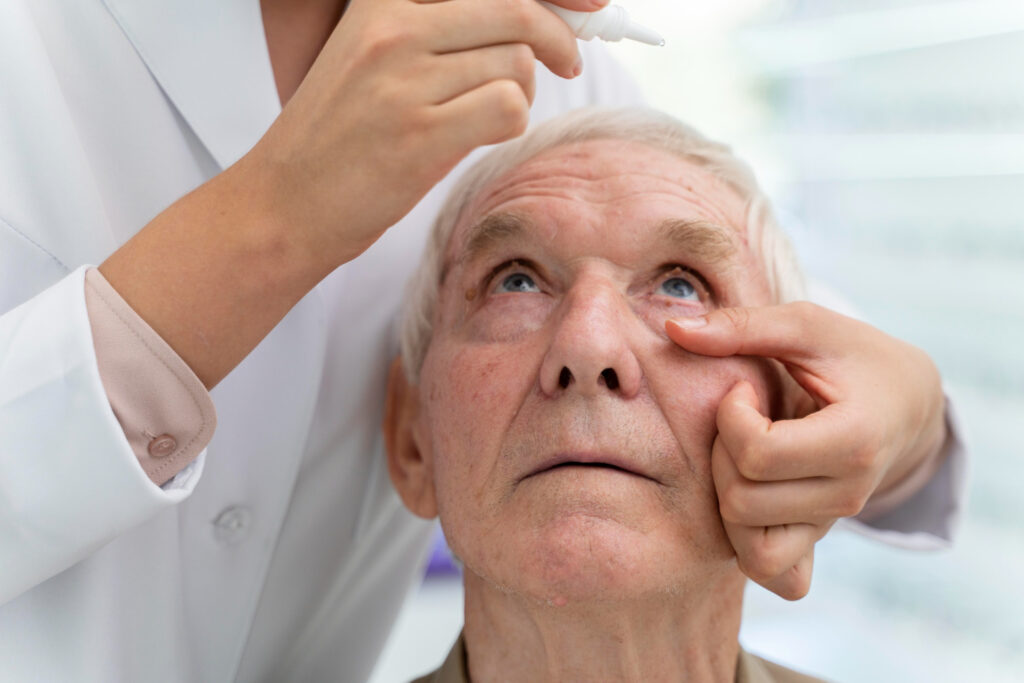
Dry age-related macular degeneration can progress slowly, which sometimes makes treatment feel less urgent than it actually is. The right approach depends heavily on the stage of the condition, because dry AMD treatment may range from regular monitoring and nutritional support to newer injectable therapies for geographic atrophy, the advanced form of dry AMD. Patients should therefore expect treatment decisions to be individualized rather than assume that everyone with dry AMD will be offered the same care.
One of the most important things to understand is that treatment is generally aimed at slowing progression and preserving useful vision for as long as possible. Damage already caused to the macula cannot usually be reversed, so early recognition of changes and regular follow-up with an eye specialist remain important parts of long-term management.
Treatment Depends on the Stage of Dry AMD
Dry AMD is not a single-stage condition. It can begin with small deposits known as drusen beneath the retina and progress over time. Some people remain relatively stable for years, while others develop more significant retinal changes and eventually geographic atrophy, where areas of retinal tissue deteriorate.
That distinction matters because treatments that may be appropriate at one stage are not necessarily useful at another. For people with early AMD, the emphasis is often on monitoring and addressing modifiable risk factors rather than starting a specific medical treatment. The National Eye Institute notes that AREDS2 nutritional supplements do not prevent early AMD from progressing to intermediate disease, so simply taking supplements after any AMD diagnosis is not automatically appropriate.
People with intermediate AMD, however, may benefit from the AREDS2 formulation. Research from the Age-Related Eye Disease Studies found that these supplements can reduce the risk of progression from intermediate to advanced AMD by around 25%. That is why eye specialists generally decide whether supplements are suitable based on the appearance of the retina and the stage of the disease rather than recommending them universally.
Where AREDS2 Supplements Fit In
AREDS2 supplements contain a specific combination of vitamins and minerals rather than simply being a standard multivitamin. The formulation includes vitamin C, vitamin E, zinc, copper, lutein, and zeaxanthin. The later AREDS2 formula replaced beta-carotene with lutein and zeaxanthin, an important distinction because beta-carotene was associated with an increased risk of lung cancer in current and former smokers.
Patients should not assume that taking more vitamins will provide greater protection. These are relatively high-dose supplements and may not be appropriate for everyone, particularly people taking certain medications or those with other health conditions. It is therefore sensible to discuss the formulation with an eye specialist or physician before starting it.
More recent research has also suggested that AREDS2 may remain useful for some people after geographic atrophy has developed. A 2024 National Eye Institute analysis found that the supplements appeared to slow the expansion of geographic atrophy toward the central fovea in many people whose atrophy initially developed away from the center of vision. This does not mean the supplements restore damaged retinal tissue, but it may broaden their role in some patients with more advanced disease.
Geographic Atrophy Now Has Medical Treatment Options
For many years, geographic atrophy had no approved treatment that could directly slow progression. That changed in 2023 when the U.S. Food and Drug Administration approved two complement-inhibiting medicines for geographic atrophy secondary to AMD.
The first was Syfovre, or pegcetacoplan, approved in February 2023. It is delivered by injection into the eye and is used to slow the progression of geographic atrophy. FDA labeling allows dosing every 25 to 60 days. Later that year, the FDA approved Izervay, or avacincaptad pegol, another intravitreal treatment for geographic atrophy.
These approvals represented an important shift in dry AMD care because patients with geographic atrophy previously had very limited medical options beyond monitoring, low-vision support, and management of risk factors.
However, these injections are not a cure. Their purpose is to slow the rate at which atrophy expands. They do not rebuild retinal cells that have already been lost, so expectations need to remain realistic.
Injections Involve a Trade-Off
The decision to begin complement-inhibitor therapy involves weighing potential benefits against the burden and risks of regular eye injections.
Intravitreal injections are performed using sterile techniques after the eye has been numbed. Although the procedure itself is generally brief, patients may need repeated treatment over an extended period. That means travel, clinic visits, retinal imaging, and ongoing monitoring become part of the treatment routine.
The treatments also carry potential risks. FDA prescribing information for Syfovre, for example, includes warnings about endophthalmitis, retinal detachment, intraocular inflammation, increased eye pressure, and the development of neovascular, or wet, AMD. Similar considerations mean treatment should be discussed carefully with a retinal specialist rather than viewed as an automatic next step for everyone with geographic atrophy.
The potential benefit may also depend on the location and rate of progression of the atrophy, vision in the other eye, overall health, and how much treatment burden the patient is willing to accept.
Monitoring Remains Essential
Even when no injection treatment is being given, dry AMD still requires follow-up because the condition can change over time. Eye specialists may use retinal photography, dilated examinations, or optical coherence tomography scans to look for structural changes that may not yet be obvious to the patient.
People with dry AMD also need to remain alert for symptoms suggesting that wet AMD has developed. These can include a sudden increase in distortion, straight lines appearing bent, new blurred areas, or a noticeable decline in central vision.
Monitoring one eye at a time with an Amsler grid may be recommended for some patients. The purpose is not to diagnose changes independently but to make it easier to notice new distortion between appointments and seek professional assessment quickly if something changes.
Lifestyle Still Matters
Medical treatment is only one part of managing AMD. Smoking is one of the clearest modifiable risk factors, so stopping smoking is particularly important for people with the condition. Maintaining cardiovascular health, eating a balanced diet, and following advice from eye care professionals can also form part of a broader strategy for protecting vision.
Patients should be cautious about supplements marketed specifically for eye health unless they correspond to evidence-based formulations recommended for their stage of AMD. The fact that a product contains vitamins or antioxidants does not necessarily mean it has been shown to slow macular degeneration.
Regular eye examinations remain especially important because treatment decisions may change as the condition progresses.
Low-Vision Support Is Part of Treatment Too
If dry AMD begins to interfere with reading, recognizing faces, driving, or other daily activities, treatment is not limited to attempts to slow the disease itself. Low-vision rehabilitation can help people make better use of their remaining sight.
This may involve stronger magnification, improved lighting, electronic reading devices, contrast adjustments, accessibility features on smartphones and computers, or guidance on reorganizing everyday tasks.
People sometimes assume that being told vision loss cannot be reversed means nothing more can be done. In reality, low-vision services can have a significant impact on independence and quality of life, even when the underlying retinal damage remains permanent.
The Outlook for Dry AMD Has Changed
Dry AMD remains a chronic condition, and there is still no treatment capable of restoring retinal tissue that has already been lost. Even so, the treatment landscape is more encouraging than it was only a few years ago.
For intermediate disease, AREDS2 supplements can reduce the risk of progression in appropriate patients. For geographic atrophy, complement-inhibitor injections now offer a way to slow the expansion of retinal damage in some people. Regular monitoring, lifestyle changes, and low-vision support remain important alongside those medical options.
The most useful approach is therefore not to think of dry AMD as having one standard treatment. Care changes with the stage of the disease, the pattern of retinal damage, and the needs of the individual patient. Working closely with an eye specialist can help ensure that treatment decisions reflect both the latest available options and the realities of the person’s vision and daily life.