
A modern coating line depends on more than the spray guns, ovens, or control panels that operators interact with each day. Hidden inside the system are safety interlocks—mechanisms that quietly prevent unsafe conditions and keep processes stable. Anyone reviewing powder coating equipment for sale or upgrading an older powder coating equipment package eventually discovers how deeply these interlocks influence compliance, reliability, and day-to-day operation.
The Purpose of Safety Interlocks Across Powder Coating Operations
Interlocks serve as the system’s built-in decision makers. They monitor whether equipment conditions meet safe operating thresholds and block actions that could cause damage or put workers at risk. Powder coating systems rely on interlocks to ensure airflow, temperature, motion, and access points stay within acceptable ranges before the powder coating machine can run. Beyond basic protection, interlocks help keep processes consistent. By preventing improper startup or incorrect sequencing, they reduce coating defects, mechanical wear, and unexpected shutdowns. This layer of control stabilizes the entire finishing process and supports long-term equipment health.
How Interlocks Prevent Unsafe Startup and Shutdown Conditions
Startup is one of the most sensitive moments in a coating operation. Without interlocks, equipment could power on before airflow is established or before exhaust fans reach the correct speed. This exposes workers to airborne powder and creates dangerous ignition scenarios. Integrated interlocks verify conditions before allowing the system to activate.
Shutdown sequencing matters just as much. Systems cannot simply power off in any order; exhaust should continue running to clear powder and heat. Interlocks ensure ovens cool properly and spray environments depressurize to prevent backdraft, powder release, or heat buildup.
Airflow Interlocks Required for Spray and Containment Zones
Airflow is the primary safety control inside spray booths and containment areas. Interlocks confirm that fans are running, filters are in place, and airflow direction keeps powder inside the spray zone. Without these checks, airborne powder could drift into walkways or nearby machinery. As the booth loads increase or filters become clogged, airflow interlocks adjust internal conditions or prevent spraying from starting. This protects both workers and the finish quality. Powder coating equipment for sale often includes digital sensors to monitor these airflow thresholds in real time.
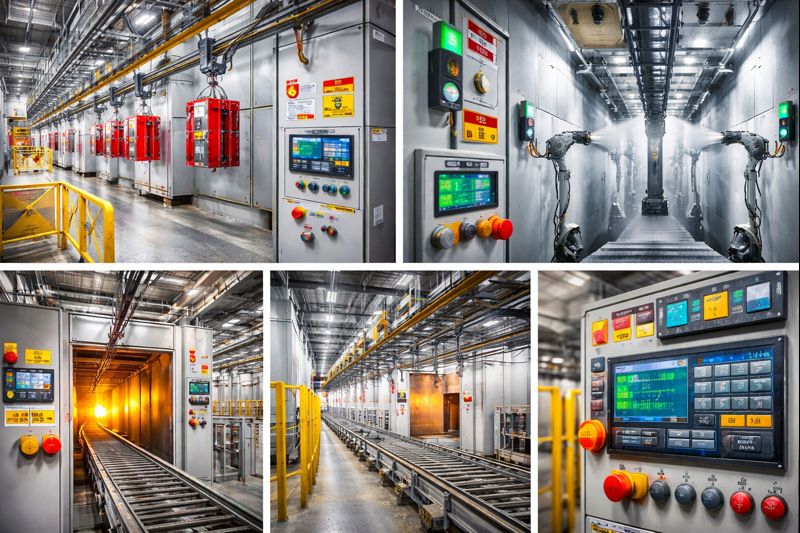
Temperature Interlocks Protecting Ovens from Overheating Events
Curing ovens operate at high temperatures, and uncontrolled heat can damage parts, warp equipment, or trigger fire risks. Temperature interlocks stop heating elements from exceeding set limits and verify that ventilation is functioning before allowing high-temperature cycles to run. These interlocks also ensure that temperature ramps occur at controlled rates. A powder coating machine depends on even, stable curing conditions to avoid blistering or incomplete bonding. Interlocks serve as the safeguard that prevents a minor temperature spike from becoming a major event.
Door and Access Interlocks Limiting Exposure During Operation
Spray booths, ovens, and conveyors must not operate with open doors. Access interlocks detect door position and immediately halt operation if someone attempts to enter an active zone. This prevents exposure to heat, moving machinery, and airborne powder. These access controls also support pressure balance. Opening a door during spraying can disrupt airflow, pull powder into unsafe areas, and compromise part coating uniformity. Interlocks restore stability by shutting down equipment until access points are fully secured again.
Conveyor Interlocks Coordinating Movement with Active Processes
Conveyor-driven systems require precise coordination. If parts move too quickly, enter an oven prematurely, or stall inside a spray zone, the process is disrupted and safety risks increase. Conveyor interlocks monitor position sensors, motor loads, and line speed to keep movement synchronized with the coating sequence.
These safeguards help prevent collisions, part jams, and improper exposure times. Powder coating equipment packages often integrate programmable interlocks that adapt automatically to recipe changes or line adjustments.
Emergency Stop Interlocks Tied to System-wide Fault Detection
Emergency stop devices only work effectively when they tie into interlocks throughout the entire system. Pressing an E-stop should immediately cut power to spray guns, conveyors, heaters, and fans in a controlled sequence. Fully integrated E-stop interlocks prevent equipment from coasting to a stop in unsafe ways. Fault detection logic complements the manual stop. If sensors detect abnormal temperature, airflow, static discharge, or fan failure, the interlock system triggers an automatic halt. This rapid response significantly reduces incident severity and equipment damage.
Electrical Interlocks Ensuring Power Isolation During Maintenance
Maintenance tasks require equipment to be electrically isolated so technicians cannot accidentally re-energize components. Electrical interlocks enforce lockout conditions and prevent control panels from restarting the system without proper clearance. These protections reduce risks associated with arc flash, moving components, and heating elements.
Electrical interlocks also verify that grounding paths and bonding connections remain intact. Powder coating systems rely on stable grounding to reduce static discharge, which is vital in powder-rich environments. The interlocks ensure electrical safety before allowing equipment to return to service.
Integrated interlocks form the backbone of safe and compliant finishing operations, supporting every stage—from spraying to curing to movement. Reliant Finishing Systems supplies powder coating equipment designed with built-in OSHA-aligned interlocks that support safe operation, reliable performance, and long-term compliance across a wide range of powder coating environments.